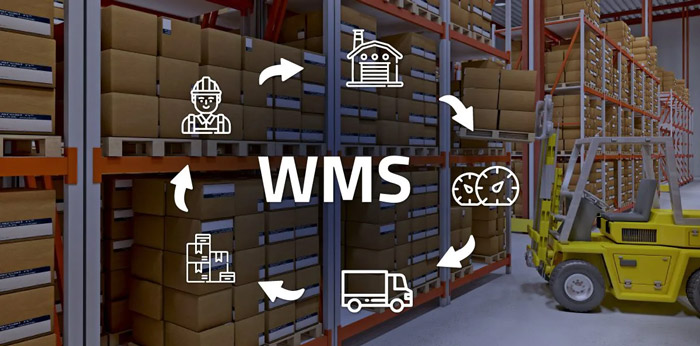
Warehouse management has a lot to do with balancing two competing important needs: Speed and accuracy.
In your business, if you manage a warehouse, you typically as possible want your people to work as quickly without causing damage to products or injuring themselves. And at the same time, if you achieve speed at the cost of accuracy, your business will experience costly restocking and customer complaints and re-delivery procedures.
Warehouse productivity is a measurement of how well you manage this conflict, together with factors like on-time delivery and warehouse utilization.
Warehouse management
Order Picking Accuracy (percent by order)
This metric (percent by order) shows how accurate warehouse employees pick products for orders. Order picking accuracy can drop with multi-part orders, where the employee has to pick products from multiple bins. The metric is also a measure of the quality of order picking instructions. For example, if the order says “Product X,” but the employee finds two bins, each with Product X in a different color, this creates a problem. He or she can take a guess at what color is needed, and then have the company suffer the consequences of a return. On the other hand, the employee can send the order back for confirmation, which creates delay and churn.
Average Warehouse Capacity Used
A warehouse is a financial asset. Because it has the collection of unsold products, waiting to be sold As a result, its rate of capacity utilization is an important number for senior management. Therefore, if a company is only using 10% of its warehouse capacity, that is will be a problem. It means they are paying for the rented place and upkeep of unproductive space. This may seem like an easy-to-spot problem as for the big problems we face in warehouses, but with multiple sites in the warehouse and changing seasonal inventories, it can be difficult to measure accurately without the right software and procedures.
Measure the performance of your warehousing operations with Matix ERP software
Peak Warehouse Capacity Used
It is also helpful to know your peak warehouse capacity utilization. The number itself can be revealing, like if it’s too low. But, unless it’s 100%, then there’s room for improvement. Peak warehouse capacity used is a target, a basis for doing better. If the number was 70% last year, then maybe this year, it could be 75 percent.
Benefits of improving warehouse accuracy: • Improving warehouse accuracy. • Inventory accuracy measurements. • Bin auditing Check that empty bins are truly empty “shows the percentage of bins in a warehouse that contain stock”.
On-time Shipments
Shipments reaching customers on-time is a critical success metric for warehouses. On-Time Shipment Readiness measures the company’s reliability in getting orders prepared for shipment, It’s important on its own because it revers if the warehouse doing its job right.
However, late shipments also create hidden costs and difficulties elsewhere in the business. Late shipments cause customer service calls and complaints. Late shipments cause package tracking and other wastes of time. Ultimately, late shipments can damage your brand and cause customers to defect.
Inventory Count Accuracy by Location
Is the inventory counts accurate in each location? This is another issue that is more important than it looks. If there are fewer items in a bin than the system says there should be, that might indicate theft or unreported damage. The results of miscounted inventory include unforeseen stock-outs and fulfillment problems that negatively customer attitudes.
Example: you count all items in inventory and compare that total with what your records say you should have. Records show 92 items and you actually have 98. You are off by 6 units.
What you will do in this case? The closest solution is, you will use your mind and divide the result of your subtraction by the accurate count. But I do not promise you accurate results to find your variance.
Overall, Strong warehouse productivity metrics arise out of good management, but also by means of the Correct warehouse management software. And this is especially and particularly directed on for businesses with high rates of inventory turnover and extensive product catalogs. Software and related technologies that services warehouse management, like bar-code scanners and RFID readers contribute to tight control and measurement of warehouse operations.
We work with many distribution businesses on the implementation of Matix erp software for distribution and warehouse management. This software solution enables you to measure the five key warehouse productivity metrics described above and more, and along with many others, effective warehouse management is more than simple data. If you want to learn more about how Matix can help your distribution business function better, let’s talk.
Leave a Reply
Revenue is the Return a company receives from providing services or selling goods to its customers, A company’s revenue, which is reported on the first line of its income statement, is often described as a service or sales revenues.
Therefore, revenue is the amount earned from clients and customers before subtracting the company’s expenses.
Revenues also referred to as the top line, are recorded when the company earns them by either shipping the product or completing a service.
As mentioned before, the majority of businesses extend credit to their customers, and therefore, when revenues are recorded, the accounts receivable total on the balance sheet is increased and cash exchanges hand only when the customer pays the bill.
When investors examine revenues, two of the most important characteristics they need to look for are revenues’ quality and dependability.
A company could show increasing revenues by extending generous credit terms to its clients, and instead of collecting the cash payments, they could record an increase in accounts receivable.
However, this type of revenue would not be dependable, and as a result, it would not be worth much.
The sources of revenues are key here and to determine them, investors usually have to do more research beyond simply reading the income statement.
P.S: Reading the full annual report is necessary but a phone call to one of the company’s customers can shine a light on how dependable a certain revenue stream can be.
Some businesses possess revenue streams that are more reliable than others. For example, cell phone or cable companies receive recurring monthly payments for their services.
Customers pay their bills monthly and if their credit cards are charged monthly, then it becomes automatic. This type of income is extremely reliable. Now, compare it to a hair salon catering to women.
As a discretionary expense, customers can easily delay or cancel hair appointments, switch to less expensive salons, or eliminate particular services, such as hair coloring.
A similar type of business is personal training. As another discretionary expense, customers can easily cancel or discontinue sessions.
Revenues for a cell phone company are much more reliable than revenues for a hair salon or a personal trainer.
Not all revenue streams are created equal.
How to calculate the revenue?
To calculate the revenue for a company during an accounting period (year, month, etc.) is to sum up the amounts earned (as opposed to the amounts of cash that were received). For example, if a new company sold $80,000 of goods in November but allows the customer to pay 30 days later, the company’s November sales are $80,000 (even though no cash was received in December).
Reporting revenues in the period in which they are earned is known as the accrual basis of accounting. So, a company’s revenue could occur before the cash is received after the cash is received, or at the time that the cash is received.
Operating expenses or OPEX refer to the expenditures associated with operating or running a business. They are necessary in order for the company to produce revenue.
They are the muscle that makes things happen. Operating expenses consist of selling, general and administrative expenses (SG&A), research and development, and depreciation.
SG&A expenses are expenditures that are not directly tied to a service or product such as overhead costs.
Selling, general and administrative expenses (SG&A) include expenditures such as sales commissions, management salaries, office supplies, advertising, and accounting and legal fees. The amount of SG&A expenses does not mean much by itself but becomes more meaningful when compared either to total revenues or gross profits.
Generally, the best businesses spend fewer revenue dollars on these activities than their competitors do.
Some companies sell such a valuable product or service that they do not have to advertise much because customers do the selling through word of mouth. This is the best kind of advertising because it is free. If, on the other hand, a business is selling a product or service that is just average and people do not really need it, then a significant amount of resources needs to be spent convincing people to buy it.
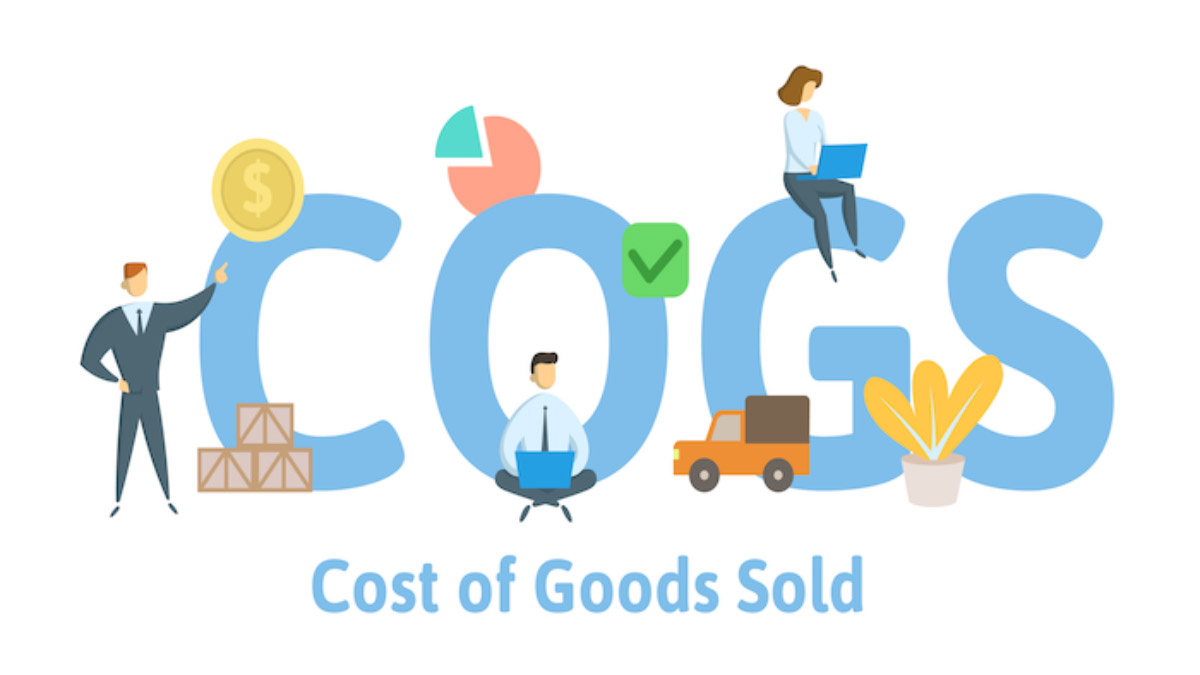
The cost of goods sold represents the direct expenditures associated with manufacturing a product. These expenditures include the raw materials, labor, and manufacturing overhead. When reselling a product, the cost of goods sold represents the cost of purchasing it from the manufacturer. When the company provides a service instead of selling a product, the cost of goods sold is replaced with another term – the cost of revenue.
What is important to note is that the cost of goods sold only appears on the income statement when the company is actually “selling” or “reselling” its products or services. What if the company is not able to sell its products? The cost of goods sold does not appear on the income statement because the preparation of financial statements of publicly traded companies has to adhere to GAAP (Generally Accepted Accounting Principles). Under GAAP, companies must follow accrual basis accounting, which means that expenses must be matched with corresponding revenues. If the company is not able to sell its products, it does not have any revenues for the corresponding costs to be matched to, and therefore, the production costs are not expensed through the cost of goods sold on the income statement. Investors can prevent unpleasant surprises by monitoring inventory levels on the balance sheet and comparing them to total assets and revenues. A significant accumulation of products in inventory without a similar increase in revenues may mean that the company is unable to sell it products, and as a result, may need to write down the inventory costs through the income statement as a loss without a corresponding increase in revenues.
The Real Difference between Operating Expenses and Cost of Goods Sold
Operating expenses and cost of goods sold measure various ways in which resources are spent in the process of running an operation. When an income statement is generated, the COGS and OPEX are shown as separate line items subtracted from total revenue or sales.
Examples of operating expenses include:
Utilities
Rent
Legal costs
Insurance costs
Payroll
Office supplies
Sales and marketing
Examples of COGS include:
Depreciation of the manufacturing plant
Labor directly tied to production
Direct materials needed for the production of goods and services
For every business, you should examine three important financial statements:
The Balance Sheet tells to investors how much money an institution or company has (assets), how much it owes (liabilities), and what is left when you net the two together (book value, net worth, or shareholder equity).
The Income Statement is a record of the company’s profitability. The Income Statement tells you how much money a corporation made or lost.
The Cash Flow Statement is a record of the actual changes in cash it shows you where the cash was brought in and where the cash was disbursed, compared to the income statement.
Defined and usefulness of the balance sheet
A balance sheet shows the financial position of the corporation at the end of every period. It provides information about nature and amounts of investments in enterprise resources, the owner’s equity in net resources and obligations to creditors.
Elements of the balance sheet
Assets
Liabilities
Equity
1- Assets: probable future economic benefits controlled or obtained by a specific entity as results of past events or transactions.
2- Liabilities: probable future sacrifices of economic benefits arising from present obligations of a particular entity to transfer assets or provide services to other entities in the future as a result of past transactions or events.
3- Equity: Residual interest in the assets of an entity that remains after deducting its liabilities. In a business enterprise, equity is the ownership interest.
These elements are then divided into several sub classifications, so the general format of balance sheet as presentation below:
AssetsLiabilities and owner’s equity
Current assets
Current liabilities
Long- term investments
Long- term debt
Property, plant, and equipment
Owner’s equity
Intangible assets
Capital stock
Other assets
Additional paid in capital
Retained earnings
The first column lists the category of assets and liabilities, and one lists the total amount for each of those categories. It may even have two years’ worth of information. Oftentimes, assets are listed in order of how quickly they will be converted into cash and liabilities are listed in order of their due dates.
How to Read a Balance Sheet
A balance sheet is composed of rows and columns that list a company’s assets and liabilities, and money owned by shareholders
Example: Present below data of Company’s balance sheet
The Classified Balance Sheet
The Balance Sheet as of December31, 201?
Assets
Current assets
***
Cash
***
Bank
***
Account receivable
***
(***)
Less: allowance for doubtful accounts
***
Notes receivable
***
Inventories
***
Prepaid expenses
***
Total current assets
Long- term investments
***
Long- term securities
***
Long- term receivable
***
Total long-term investments
Property, plant, and equipment
***
Land
***
Building
***
(***)
Less: accumulated depreciation
***
Machinery and equipment
***
(***)
Less: accumulated depreciation
***
Total Property, plant, and equipment
Intangible assets
***
Goodwill
***
Trademark
***
Total Intangible assets
***
Total assets
Liabilities and stockholder’s equity
Current liabilities
***
Notes payable
***
Account payable
***
Accrued interest on notes payable
***
Accrued salaries, wages and other liabilities
***
Income tax payable
***
Total current liabilities
Long- term debt
***
Bond payable due after 5 year
***
Mortgages and other notes due after 12 year
***
Debentures due after 15 year
***
Total long- term debt
Stockholder’s equity
Capital stock:
***
Preferred ** par value, issued and
outstanding*** shares
***
Common ** par value, issued and
outstanding*** shares
***
***
Additional paid in capital
***
Retained earnings
***
Total stockholder’s equity
***
Total Liabilities and stockholder’s equity
Why Is The Balance Sheet Important?
The balance sheet in accounting Software is an important financial statement that provides a snapshot of the financial health of your company at a point in time. You can also look at your balance sheet in conjunction with your other financial statements together to better understand the relationships between different accounts. A balance sheet is important because it provides you that the following insights about your business:
Liquidity
By comparing your business’s current assets to its current liabilities, you’ll get a clear View of the liquidity of your business, or how much cash and amount you have readily available. you mostly want to own a buffer between your current assets and liabilities to cover your short-term financial obligations, with assets always greater than liabilities.
Efficiency
By comparing your earnings or income statement to your balance sheet, you will be able to measure how efficiently your business uses its assets. For example, you can get an idea of how well your company is able to use its assets to generate revenue.
Leverage
Your balance sheet can help you understand how much leverage your company has, which tells you how much financial risk you face. To judge leverage, you can compare the debts to the equity listed on your balance sheet
It’s known that supply chain management is an integral part of most businesses and is essential to company process success and customer satisfaction.
What is Supply chain management?
Supply chain management is the integrated process-oriented planning and control of the flow of information, goods, and money across the supply chain and entire value from the customer to the raw material supplier.
What is a Supply Chain?
An entire system of producing and delivering a service or product, from the beginning stage of sourcing the raw materials to the final delivery of the service or product to end-users and Consumers.
In another means, a supply chain is the network of all the organizations, individuals, resources, technology, and activities involved in the creation and sale of a product, from the delivery of the source materials from the supplier to the manufacturer, through to its eventual delivery to the end-user.
The main importance of Supply Chain Management
Supply chain lays out all aspects of the production process, including the activities involved at each stage, information that is being communicated, natural resources that are transformed into human resources, useful materials, and other components that go into service or the finished product.
On-time delivery: Avoiding any bottlenecks and ensure customers get their products in the promised time frame
After-sales services: the right supply chain ensures that customers get the service they want
Supply chain management components
Procurement
Manufacturing
Distribution
Logistics
Sales
Supply chain management components definition
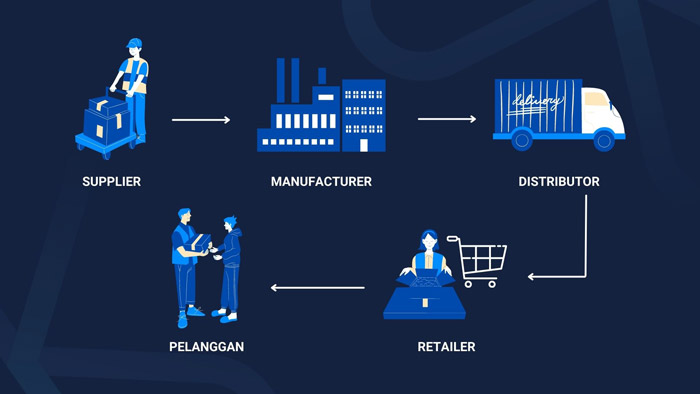
Supply chain The generic supply chain begins with the extraction and sourcing of raw materials. And raw materials are then taken by logistics to a supplier, which acts as the wholesaler.
The materials are taken to a manufacturer through logistics, or probably various manufacturers who process and refine them into a final product.
It goes to a distributor afterward, that wholesales the final product, which is delivered to a retailer next. And the retailer sells the product in a store to consumers.
Once consumers buy it, the cycle completes, but then when it goes back and drives the production of more raw materials it’s their demand to continue the cycle.
ERP Softwaresolutions allow for the integration and automation of business processes, therefore reducing the amount of manual labor that the company team has to perform.
For example, an ERP supply chain solution might receive a client order and then send that information automatically to the distribution center that is most efficiently positioned to finish and complete the order in a timely manner.
If you’ve ever noticed that the return address on products that you receive isn’t always the same from the same vendor, Depending you will see the result of the ERP technology firsthand to Eliminate this Errors.
ERP system looks at inventory levels, Order Tracking, shipment times and other factors to decide which distribution center would be most productive and cost-effective in completing an order and Minimize the Delay. it contains dashboards where users can look at real-time data collected from all across the business to measure productivity and profitability.
ERP system uses a centralized database for various business processes to reduce manual labor and to simplify existing business workflows In general, and that’s the meaning of Automation of workflow for reduced overhead and operational costs
ERP Improves Productivity
Without ERP software, data is siloed by the department and can be difficult to access across a company. By using an ERP, data from multiple departments can be easily shared and visualized across an organization. This wealth of information and simplification can assist in the development of business goals and reduce the amount of time that your employees spend on tasks that could be automated. In short, the ERP system in Supply Chain helps commercial areas like finance, logistics, sales, production, distribution, and others to be interrelated to each other.
Leave a Reply
The three financial statements – the balance sheet, the income statement, and the cash flow statement – all serve different purposes. One might be more suited to determine the company’s profitability, and another might be better for showing the company’s assets. They should all be studied together because they are connected, and by analyzing these relationships, investors are able to uncover the economics of particular businesses and decide if purchasing or selling them are prudent choices.
ʻʻThe income statement measures the results of operations during the periodʼʼ
Matix helps you provide the best accounting tools you need through its ERP systems.
The income statement is an important financial report that shows an enterprise’s success in terms of profitability. Unlike the balance sheet the income statement is prepared for a given period such as a quarter or a year, versus a snapshot on a particular day
The preparation of this financial report is based on the following formula:
Revenues – expenses = profit or loss
If the business brings in more revenues than it pays out in expenses, it reports a profit. Otherwise, it reports a loss. The following is a sample income statement.
Revenues: Revenue – Cash inflows of assets of an entity during a period from rendering services, producing or delivering goods, or other activities that constitute the entity’s ongoing main operations.
It is often given as sales discounts sales minus, allowances and returns. Each time a company performs a service or sells a product, it obtains revenue. This usually is mentioned as sales revenue or gross sales.
xxx(xxx)
:Sales RevenuesSalessales returns
xxxx (xxxx)
Net Sales
xxx xxxx
xxx(xxx)
:Cost of goods soledBeginning InventoryPurchasePurchase Retunes
Xxxxxx
Net PurchasePurchase Expenses +
xxxx(xxx)
Cost of goods available sealsEnding Inventory
xxx (xxx)
Goss profit
xxxxxx
Seals Expenses
Administrative Expenses
xxxxxx
Net profit of Operating
Others Revenues +
xxx
Net profit
Expenses: Cash outflows or other using up of incurrence or assets of liabilities during a period from rendering services, producing or delivering goods, or carrying out other activities that constitute the entity’s ongoing major of the company.
profit and loss statement
The Profit and Loss account summaries a firm’s trading results over a period and shows how the resulting profits were used, or how the losses were financed. The profit and loss account tends to have more value to the managers of the firm than the balance sheet that is directed more at those outside reviewing the firm. It covers the profits and losses usually over a period of a year, larger businesses often produce them half-yearly or quarterly. The most features of a profit and loss account are
1.Sales revenue fewer costs = profit this is the basic equation that underpins the profit and loss account. Revenue can cover a wide range of activities, investments, sales receipts, cash transactions, etc. Sales revenue excludes any benefit tax.
2.The cost of goods sold is the first group of subtractions, which is about how much it cost you to produce the goods and services that generated the revenue. It includes all costs related to the product (often called production costs). So direct materials, direct labor, plus all overhead costs that can be allocated to the production process.
3. Gross profit is the sum remaining when you have deducted the cost of goods sold from sales revenue
The usefulness of the income Statement
Income statements help investors and Creditors to determine the past financial performance of the enterprises, assess the capability of generating future cash flows through reports of the expenses and income, and predict future performance.
Information on an income statement contains several limitations: Items that might be relevant but cannot be reliably measured (e.g. brand recognition and loyalty) are not reported.
Some numbers depend on accounting methods used (e.g.to measure inventory level using FIFO or LIFO accounting).
Some numbers in income statements rely on estimates and judgments (e.g. depreciation expense depends on salvage value and estimated useful life).
Guidelines for statements of comprehensive income and income statements of business entities are formulated by the IFRS International Accounting Standards Board and numerous country-specific organizations, as an example: in some companies, Names and usage of various accounts within the income statement depend on the kind of organization, industry practices and therefore the requirements of various jurisdictions. If applicable to the business, summary values for the following items should be included within the income statement.
Operating section: Revenue – Expenses – Cost of Goods Sold (COGS) / Cost of Sales
Cost of Goods Sold (COGS) / Cost of Sales: represents the direct costs attributable to goods produced and sold by a business (merchandising or manufacturing). It includes direct labor, material costs, and overhead.